
The short answer: Executives get cited in AI answers by being visible where models read: named on their firm's website and blogs, posting and commenting on LinkedIn, publishing clearly structured content, and being mentioned by third parties. Large language models don't see closed deals. They scan thousands of sources and surface the people who talk about their work, which is why the most accomplished broker rarely ranks first.
Someone asked me recently why a broker who doesn't close much ranks so highly when buyers ask AI who to call. I can't tell you exactly how he's ranking, and nobody outside the model can. But when I looked into a case like this, one signal was doing most of the work: he was constantly publishing content on LinkedIn and on his own website. We compared him with brokers who had their own websites or posted on their big firms' company sites, and he outdid them by far, even the ones with higher deal volume, simply because he published so much more often.
It's very rare that the most accomplished broker is actually correct in the rankings. It's almost always the ones who are either being propped up by their firm or creating a ton of content. Closed deals don't show up in a language model. What shows up is people talking about their work, content that's structured well, and firms that put their people's names in front of the internet.
That frustrates top producers, and I understand why. They spent years doing the work instead of talking about it. But the buyer asking ChatGPT for a recommendation never sees the track record. They see whoever the model found.
An LLM reads 10,000 sources, not 10 links
The difference with a Google search is that you look through basically 10 links, 20 links, whatever. An LLM is looking through 10,000 sources. So you may not see what a broker is doing, and I might not see it, but an LLM might find it. A LinkedIn post. A comment under someone else's post. A mention in a blog on his firm's site. You have to look at all of that.
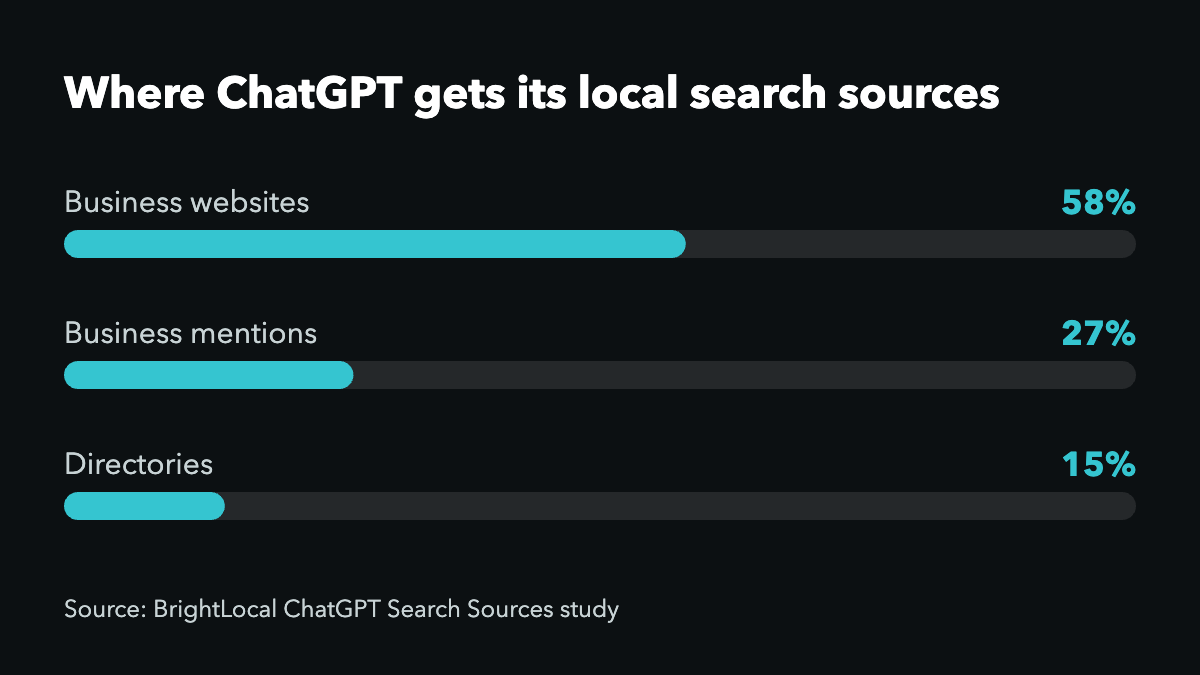
The research on where these answers come from backs this up. The BrightLocal ChatGPT Search Sources study found business websites make up 58% of all local search sources in ChatGPT, followed by business mentions at 27% and directories at 15%. Your firm's website is the single biggest input. If it lists you on a team page and nowhere else, the model has very little to say about you.
Being talked about elsewhere counts for more in AI than in traditional search. The BrightLocal ChatGPT Search Sources study found business mentions made up 27% of ChatGPT Search sources, compared with 16% for Google's search engine results. It also found Wikipedia results account for 39% of all business mention sources. Third parties talking about you carry real weight.
Buyers have already moved
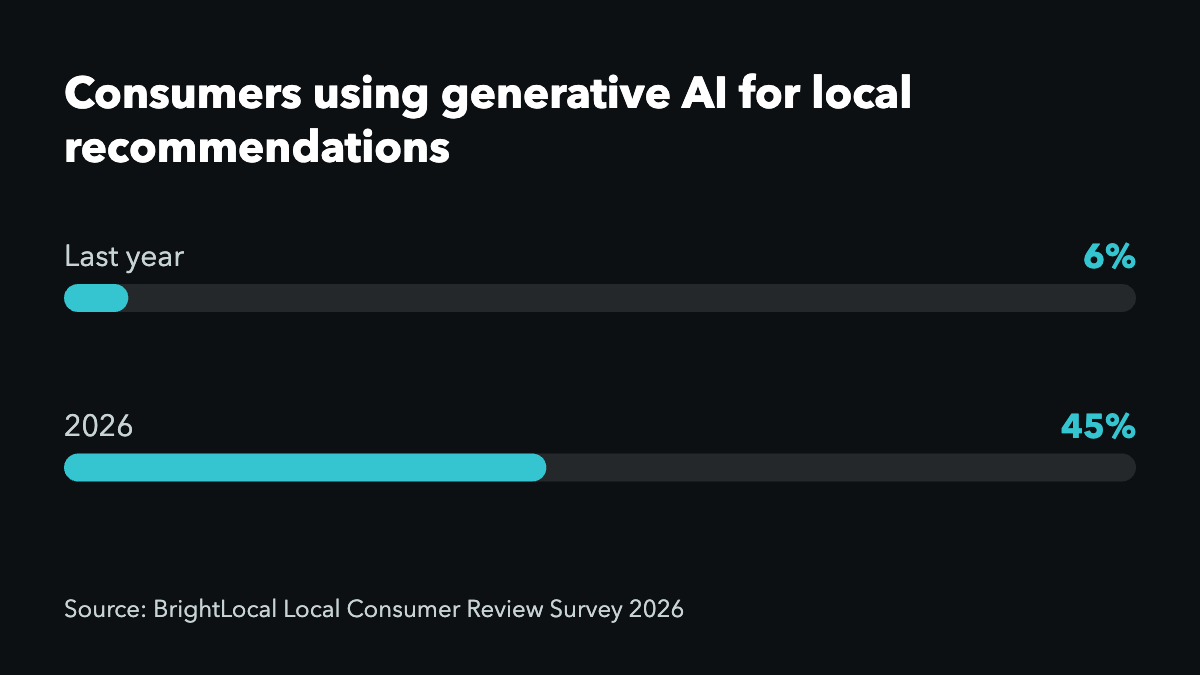
This would matter less if nobody asked AI for recommendations. They do. The BrightLocal Local Consumer Review Survey 2026 found use of ChatGPT and other generative AI tools for local recommendations rose from 6% last year to 45%.
People take those answers seriously. The BrightLocal Local Consumer Review Survey 2026 found 40% of consumers trust AI platforms to provide business recommendations, and 82% of consumers read AI generated review summaries, with 23% willing to rely solely on them to decide.
They act on them too. The Sagapixel ChatGPT local services study found 40% felt ready to call and make an appointment based entirely on what they found through ChatGPT, and 39.2% of users visited the website from ChatGPT. It also found 17.6% of participants clicked to the business website from a Google Search after finding the brand on ChatGPT. If you're not in that answer, you're not on the call list.
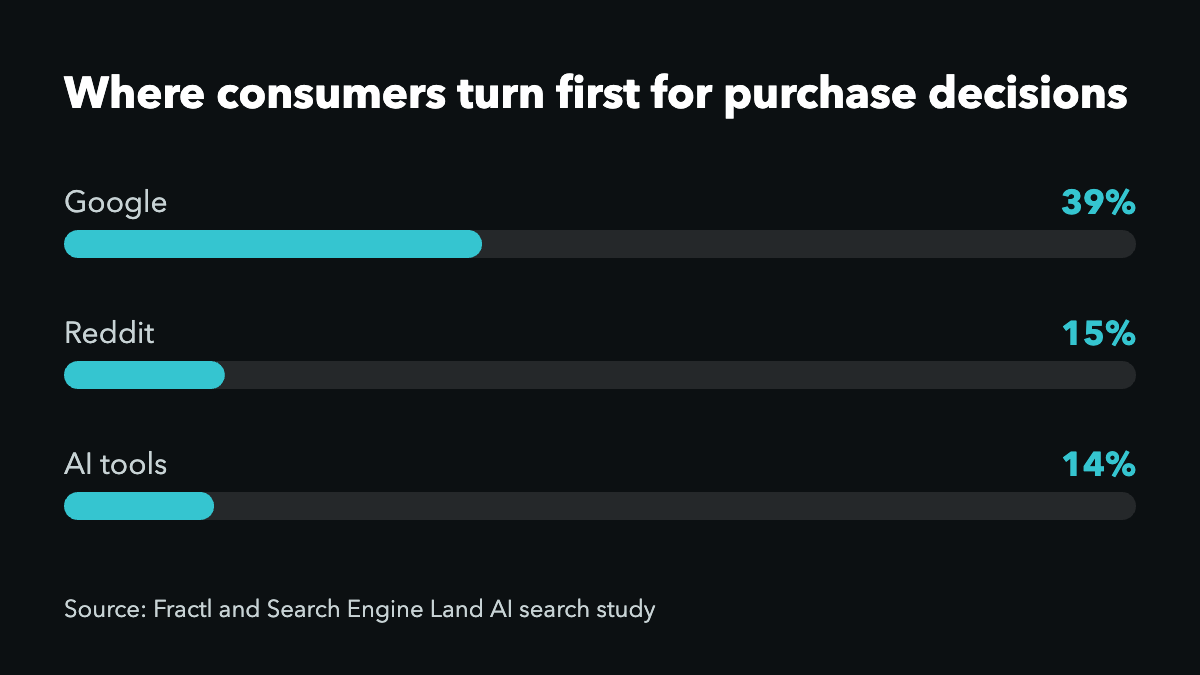
AI hasn't replaced everything else. The Fractl and Search Engine Land AI search study found that when making purchase decisions, 39% of consumers turn to Google first, 15% to Reddit and 14% to AI tools. It also found 70% of consumers report increased use of AI tools for search over the past year. Google still leads, but the direction is clear.
One mention isn't enough
Showing up once doesn't mean you'll show up again. The AirOps citations and mentions report found that on average only 30% of brands remained visible in back to back responses, and only 1 in 5 brands maintained visibility from the first run to the fifth. Ask the same question twice and you can get a different list.
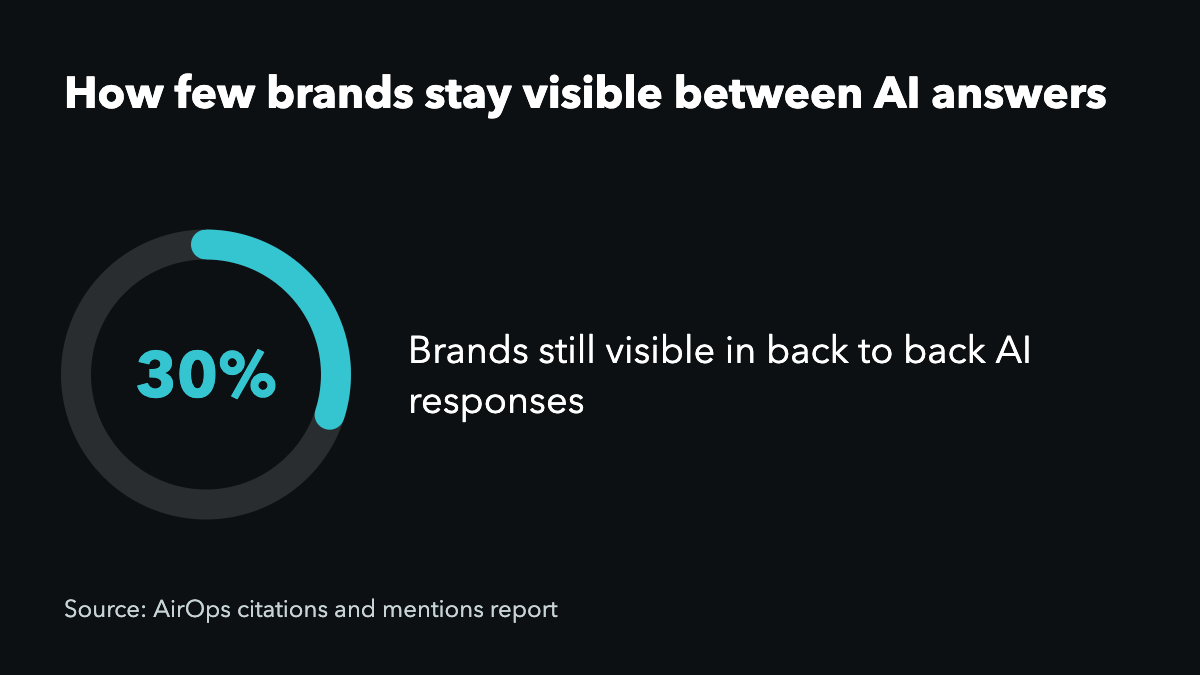
The AirOps citations and mentions report also points to what helps. Brands earning both a citation and a mention were 40% more likely to resurface across runs than brands earning citations alone. It found ~57% of brands that disappeared from one response resurfaced in a later run, so dropping out once isn't fatal. That's the case for being on your firm's site and being talked about elsewhere at the same time.
The models don't agree with each other either. The Search Atlas LLM citation analysis found only 60% to 65% of queries produce at least 1 shared domain across all 3 systems, and the highest pairwise similarity, between Gemini and OpenAI GPT models, was 42% domain overlap. Showing up in many places beats one perfect page.
Where a quiet top producer should start
Start with your firm, because getting named on its site and blogs is the cheapest fix there is. The brokers who rank are often the ones the firm is already propping up. Don't just ask leadership to feature you. Go to them with thought leadership already written and ask them to publish it on their site. One of the major benefits of being with a major firm is that you can use its brand for your own exposure, and if the content is solid, the firm should want to publish it.
Then post on LinkedIn more. You don't need to become a creator overnight. Even leaving comments on other people's content counts, because the model reads that too. Talk about your work, the problems you solved and what you're seeing in your market.
Structure what you publish so a model can use it: your name and your specialty stated plainly, one clear topic per piece. Content that's well structured is easier for a model to pull from and tie back to you.
Your competitors are already moving. The BrightLocal Small Business Marketing Report 2026 found 65% of small businesses are working on AI visibility, and 54% have checked and are confident their business appears in AI results. The BrightLocal Small Business Marketing Report 2026 also found that of consumers who began a local search on an AI tool, only 2% used it as their only channel. This work supports the rest of your presence rather than replacing it.
Your record still matters once a buyer reaches you. It just won't get you named. The people who talk about their work get named.
Frequently asked questions
Why does a less accomplished broker rank higher in AI answers?
Language models don't see closed deals. They surface people who are named on their firm's site and blogs, who post and comment on LinkedIn, and who create a lot of content. It's very rare that the most accomplished broker ranks first; it's usually the one being propped up by the firm or producing the most content.
How is AI search different from Google for being found?
On Google you look through basically 10 or 20 links. An LLM looks through 10,000 sources, so it can pick up LinkedIn posts, comments and blog mentions you'd never notice. Business mentions also make up 27% of ChatGPT Search sources, compared with 16% for Google's search engine results.
What is the first step to get named in AI answers?
Start with your firm's website. Business websites make up 58% of local search sources in ChatGPT, according to BrightLocal. Ask your firm to name you on the site and in different blogs. After that, post on LinkedIn more and leave comments on other people's content.
Do buyers actually use AI to choose a professional?
Increasingly, yes. BrightLocal found use of generative AI for local recommendations rose from 6% last year to 45%, and Sagapixel found 40% felt ready to call and book based entirely on what ChatGPT told them. Google still comes first for 39% of purchase decisions, though.
If I appear in an AI answer once, will I keep appearing?
Not necessarily. AirOps found only 30% of brands stayed visible in back to back responses and only 1 in 5 lasted from the first run to the fifth. Brands earning both a citation and a mention were 40% more likely to resurface, so being on your site and mentioned elsewhere helps.
AJ Agrawal is the co-founder of OnBrand, which helps companies with employee led answer engine optimization. Read more about OnBrand.