
The short answer: Claim your profile and get it accurate, but don't expect it alone to earn recommendations. A brand agent in ChatGPT can answer simple product questions, like return policy, but it can't speak for your company. Publish your own narrative through senior leaders so ChatGPT learns the story you want told. Disclose that your agent is an AI, route anything emotional or high stakes to a human, and treat paid placement as an experiment.
OpenAI has opened a Business Hub, still in beta, where companies can create business profiles and verify and update information about their products and services, according to TechCrunch’s report on ChatGPT business profiles. Eligible companies can also launch their own business agent. My first thought was that this could be great for simple questions. My bigger question was how brands will find the line between what an AI chatbot answers inside ChatGPT and what gets routed to a human. That is going to be the sensitive balance.
Read the transcript
What you should first do with the ChatGPT profile is try to decide, as a business, what things you trust an agent to do and what things you trust your human team to do. And with that, I think it requires having a workflow that basically decides: is this customer complaint, should it be routed to an agent, should it be routed to a human?
A billing dispute is where I draw the line. The agent can offer helpful articles or resources, but it should also offer the chance to be routed to a human. A complaint is different again. If somebody writes "I hate this company, this company is awful," that has to skip the agent entirely and go straight to a person.
The way to operationalize this is a grading system inside the organization, where every customer prompt gets a severity score that decides whether it goes to the agent or to a human. A real version would look at what the customer is saying and who they are. The system should be able to identify the pricing involved or how much a customer is spending. Certain words should push a prompt up the scale: billing gets flagged, and if a security breach or legal action gets mentioned, that should be brought to a human. Twilio’s report on the AI expectations gap found 63% of consumers want a quick, easy way to escalate to a live person at any time, and 78% have tried to bypass AI agents to speak to a human. That confirmed what I already assumed. “Sometimes when it comes to agents or AI, what you'll end up seeing is it tries to pigeonhole that case into one that it recognizes, and sometimes it can feel like you're not truly being heard for exactly what you're asking, and I think that's when a real person can step in for a bot because that is a level of communication and that's a level of personal touch that a buyer is usually looking for in those situations,” says Arun Koshy, Co-Founder of OnBrand.
Copy the workflow you already trust
For now, Mi3’s report on Businesses in ChatGPT says Business Agents are restricted to qualifying ecommerce and online service companies in the United States. If you qualify, the first decision is which questions you are comfortable letting the agent answer.
I wouldn't bother having the AI take on detailed or opinionated questions yet. Be as conservative as possible and treat the agent as an extension of what you already run. Most enterprises have a system where an AI answers if the question is simple or based on how they grade the value of the customer, and if the question isn't simple or the customer is very high value, they skip the agent. Duplicate that workflow on your ChatGPT business page as closely as you can.
Caution is warranted. Twilio’s report on the AI expectations gap found 86% of companies believe customers are satisfied with their AI customer service, but just 51% of consumers agree, and 91% of brands report a drop in customer satisfaction from AI errors.
Accuracy is the whole game
ContentGrip’s analysis of the ChatGPT Business Hub notes OpenAI has not promised a ranking boost for a claimed profile. I think accuracy alone is worth everything. In customer success, the most important metric is whether we gave the customer the right response and solved their problem. If we didn't, nothing else matters.
ChatGPT makes mistakes all the time. I've seen it return inaccurate information about my own history and what I do. Before a call with a company's salesperson, I looked them up on ChatGPT, and it showed me a completely different person with a completely different background. When I got on the call, I was shocked at who I was actually speaking to, and I had no real background on them at all.
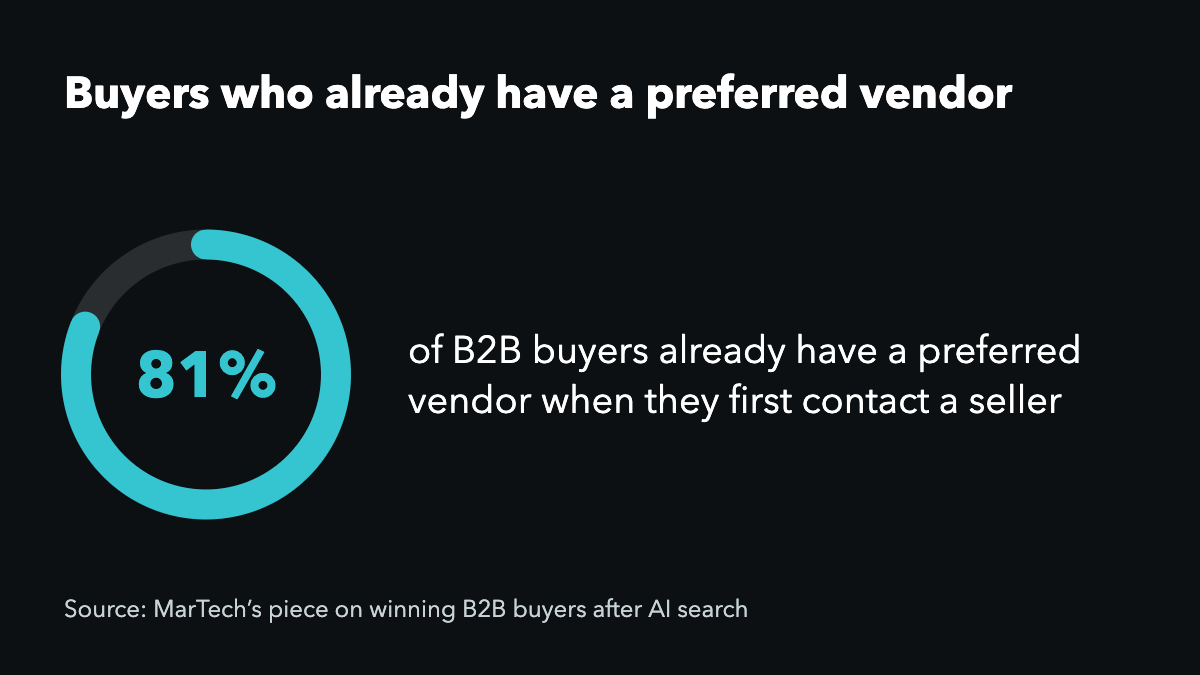
Accuracy is also what earns a buyer's trust enough to talk to your people. That first impression carries weight: MarTech’s piece on winning B2B buyers after AI search cites 6sense research finding buyers complete nearly 70% of the buying process before engaging with sellers, and 81% already have a preferred vendor at first contact.
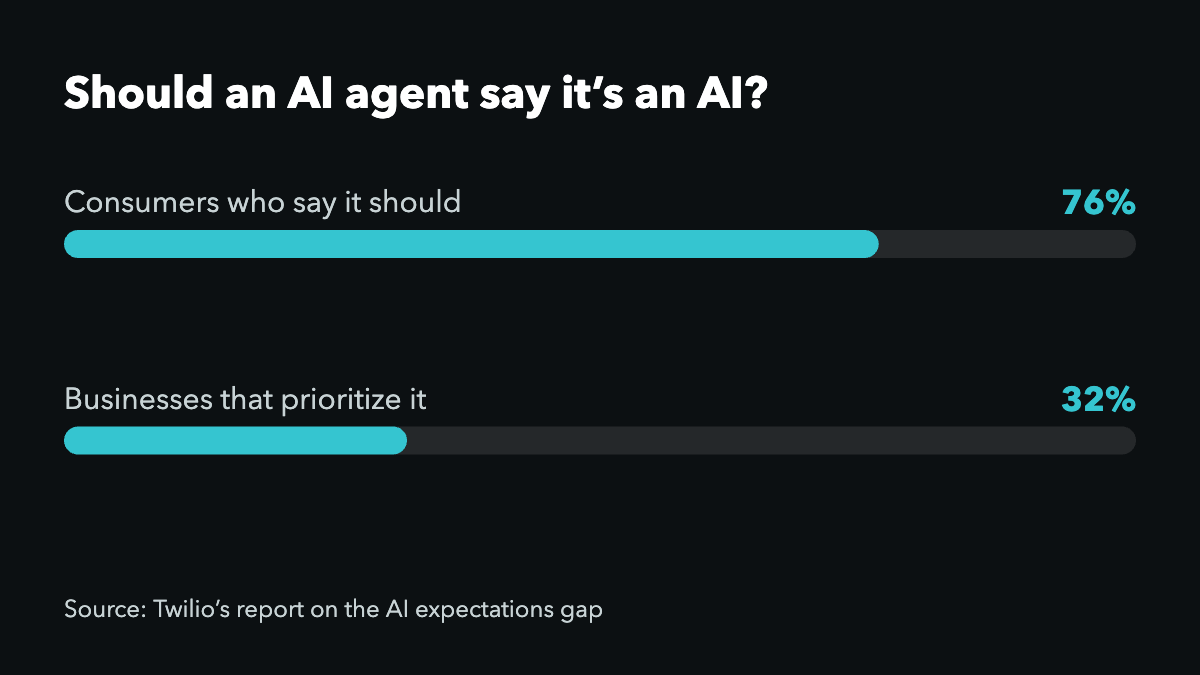
Part of accuracy is being honest about what the agent is. Twilio’s report on the AI expectations gap found 76% of consumers feel an AI agent should identify itself at the beginning of a conversation, but only 32% of businesses actively prioritize AI transparency. You have to make it obvious. If you don't, it erodes customer trust, and people start to feel you are trying to trick them. Authenticity and trust are everything.
Tell ChatGPT your story through your leaders
The important thing for enterprises is to publish content, with senior leaders pushing out their own, so you are telling ChatGPT the narrative you want told instead of relying on it to get everything right about you.
The hub won't tell you whether buyers believe what they read. Unbundl’s guide to the ChatGPT Business Hub says brands get mentions, website clicks and discovery topics for the past 28 days. For trust, look at public sentiment about your product or service on Reddit, LinkedIn and Quora. Summarize what customers complain about and what they like, then turn those into topics your leaders write about, so that what they publish surfaces in LLMs and improves the narrative.
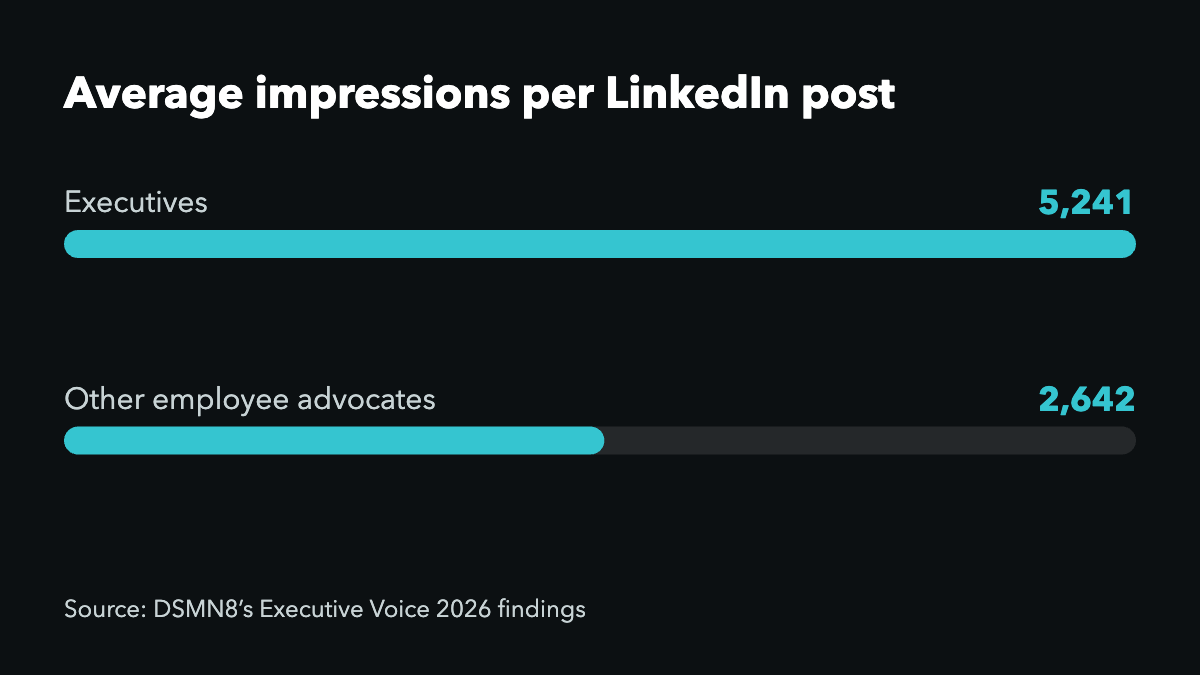
Executives carry further than anyone else. DSMN8’s Executive Voice 2026 findings, from 62 organizations, show executive posts averaged 5,241 impressions, compared with 2,642 for other employee advocates. Those voices should be distinct. Your Head of Sales, Chief Engineer and CTO should not all share the same opinion on a new customer service initiative.
As every AI tool automates customer interactions, a senior leader talking to a customer becomes a viral event. When Sundar Pichai replied to customers himself, that was worth more than any press release about a new customer service tool. AI can help, but it is a tool, not the complete solution for customer success.
Treat paid visibility as an experiment
Businesses can sponsor their agent as the destination for ChatGPT Ads, but Mi3’s report on Businesses in ChatGPT says the announcement does not disclose pricing or provide evidence of improvements in sales conversion. ContentGrip’s analysis of the ChatGPT Business Hub adds that website clicks indicate interaction with links, not verified purchases. I would hold off until you can track a clear ROI from the business profile page to close. Experiment, but track the full customer flow.
A study I shared recently covered 1,900 websites: paid ChatGPT visits in the U.S. brought in $0.89 per session against $2.45 for Google Search ads, 64% less revenue per visit, with conversion rates of 0.37% versus 1.17%. A lot of companies get overly excited about ads on LLMs because it's the new hot thing. Be disciplined about true ROI before investing heavily.
If a CMO asked me what to do this week, I'd say get a handle on it. Look at what you already trust AI to answer for your brand elsewhere and replicate that strategy. Go slow, measure the ROI, and keep tracking it.
Frequently asked questions
What questions should a brand agent in ChatGPT answer?
Simple, binary questions with one clear answer, such as the return policy for a product. Avoid detailed or opinionated questions at the start. Be as conservative as possible and copy the rules you already use for AI answers in your other customer channels.
When should a ChatGPT agent hand off to a human?
Billing disputes should get helpful resources plus an offer to reach a person. Emotional complaints, like someone saying they hate the company, should skip the agent entirely. A severity grading system based on keywords in each prompt decides the route. Twilio found 78% of consumers have tried to bypass AI agents to speak to a human.
Does claiming a ChatGPT business profile improve rankings?
OpenAI has not promised a ranking boost for claimed profiles. The value is accuracy. ChatGPT regularly gets details wrong, and in customer success the right response is the metric that matters most. If the answer is wrong, nothing else counts.
Should a brand agent disclose that it is an AI?
Yes, and obviously. Twilio found 76% of consumers feel an AI agent should identify itself at the start of a conversation, but only 32% of businesses prioritize AI transparency. Hiding it erodes trust and makes customers feel tricked.
How do executives fit into AI search visibility?
Senior leaders should publish their own perspectives so ChatGPT learns the narrative you want told. Use public sentiment on Reddit, LinkedIn and Quora to pick topics. Executive posts averaged 5,241 impressions versus 2,642 for other employee advocates in DSMN8's findings.
Is it worth paying to sponsor a ChatGPT business agent?
Treat it as an experiment until you can track ROI from profile to close. No pricing or conversion evidence has been disclosed, clicks aren't purchases, and one study found paid ChatGPT visits earned 64% less revenue per visit than Google Search ads.
AJ Agrawal is the co-founder of OnBrand, which helps companies with employee led answer engine optimization. Read more about OnBrand.